
Highway Heroes: Truck Manager
PIXEL FEDERATION, s.r.o.Strategy
4.6283.00 Reviews
- Version
- 2.12.0
- Installs
- 100.00K
- Age Rating
- Everyone
Screenshots
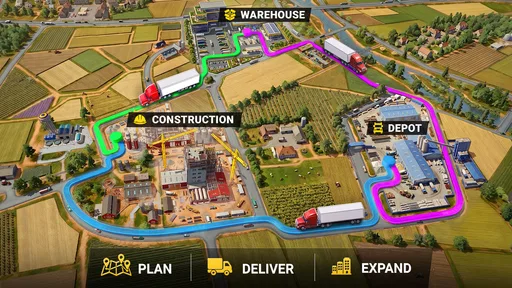
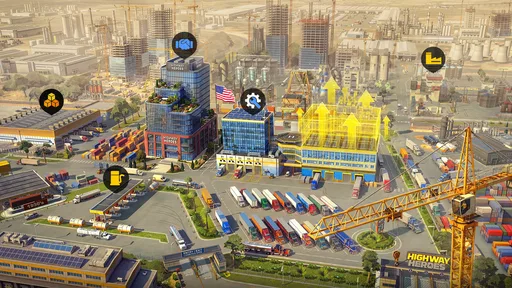
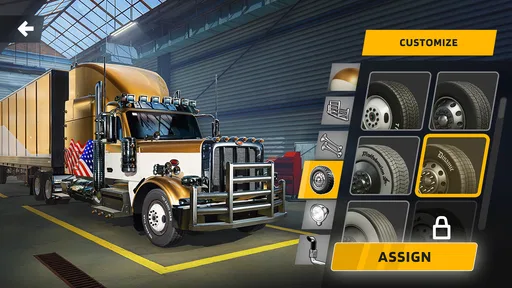
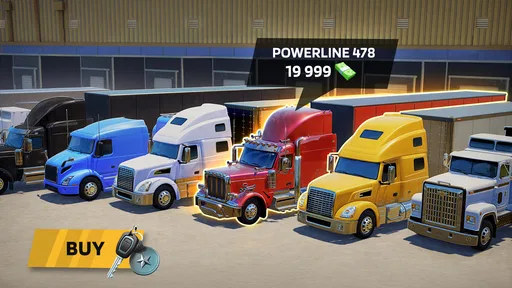
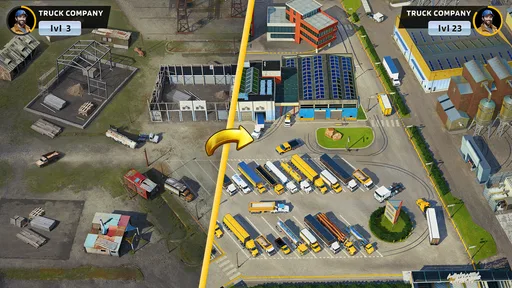

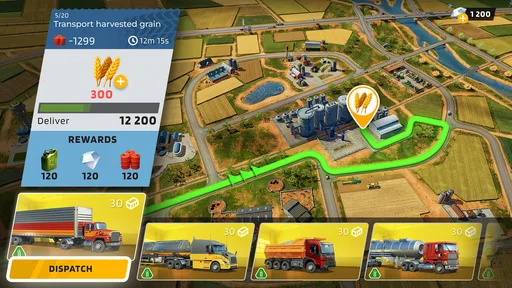
Our Review of Highway Heroes: Truck Manager
 Analysis by Appyee
I approached Highway Heroes: Truck Manager as a strategy game first and as a practical mobile experience second. Its basic idea is easy to understand: build a transport company, manage trucks, customize your operation, and grow it over time. That makes it immediately more approachable than a strategy title that begins with a dense story, a large technology tree, or several competing currencies.
What interested me most was how the game feels when I use it in ordinary situations rather than during a long, uninterrupted session. A truck-management game can be welcoming when its information is clear and its decisions are easy to revisit, but it can also become tiring if every screen demands close attention. My experience with this release from PIXEL FEDERATION, s.r.o. is that it offers a fairly readable entry point, while still asking players to keep track of several layers of progress as the company expands.
How clearly the company-building experience is presented
The game’s strongest accessibility quality is its familiar structure. I can understand the main loop without needing to master complicated controls: look at the transport business, decide how to improve it, and use the results of those decisions to expand. That basic rhythm helps players who prefer planning over fast reactions, and it also makes the game easier to approach in short visits.
Navigation matters more in a management game than it might seem. Players are not only choosing a truck or starting a job; they are repeatedly moving between business information, customization, transport decisions, and expansion choices. When those areas are grouped in a logical way, I can focus on the decision itself instead of remembering where a particular action is hidden. Highway Heroes benefits from presenting itself as a focused trucking-management experience rather than trying to imitate every kind of strategy game at once.
I also appreciate that the central fantasy is concrete. “Build a company” is easier to follow than an abstract objective because each improvement can be connected to the transport operation. Someone who finds broad strategy games intimidating may find this setting more comfortable: trucks, routes, upgrades, and growth give the experience a practical shape.
That does not mean every player will find the information effortless. Management games naturally create a growing amount of detail, and the more the company develops, the more important it becomes to distinguish useful information from decorative presentation. My advice is to pause before spending resources and read the available descriptions rather than treating every highlighted option as equally urgent. This is particularly helpful for players who need more time to process choices.
The game is free to start, which lowers the barrier for trying it. It is rated for Everyone, and its current version is 2.10.0. Those details make it suitable for a broad audience, but an age rating should not be confused with a guarantee that every screen will be equally easy for every person to read or operate.
Readability during everyday play
For me, the most comfortable way to play is to treat each visit as a small planning session. I check what the company needs, identify the most useful next action, and avoid opening every available option at once. This approach reduces visual and mental clutter, especially when I am playing on a smaller phone.
A realistic example is a commute or a short break at home. I may have only a few minutes, so I want to inspect the state of the business, make one sensible adjustment, and leave without feeling that I abandoned a complicated chain of tasks. Highway Heroes suits that kind of deliberate interaction better than a game built around rapid tapping or constant timing.
Players with reduced vision may still need to judge whether the text, icons, and contrast are comfortable on their particular device. I would not assume that a general audience rating means the interface will work equally well for every visual need. Increasing the phone’s display size, using a brighter environment without glare, and keeping the screen clean can make small management details easier to inspect. If reading compact interface elements is already difficult on your phone, this may not be the most comfortable strategy game for extended sessions.
One useful habit is to separate “information reading” from “action taking.” I first inspect the business state, then decide what to change. That simple order prevents accidental purchases and makes the game less stressful for anyone who benefits from a slower, more predictable workflow.
Motor demands and sensory comfort
Highway Heroes is a better fit for players who prefer taps and considered choices to demanding physical input. The truck-management concept points toward planning rather than reflex play, so I do not approach it as a game that requires rapid swipes, precise aiming, or continuous hand movement. That can make it more manageable for people who find action-heavy mobile games tiring.
However, “not reflex-based” does not mean “effortless for every motor ability.” Repeated tapping, selecting small controls, or navigating several screens can still become uncomfortable. Anyone with limited reach, tremor, joint pain, or fatigue should test the basic interaction before committing to long sessions. I find that short visits are more pleasant than trying to complete every available task in one sitting.
The game’s sensory profile will depend heavily on the player’s device and personal tolerance. A transport-management setting can be visually busy because trucks, menus, progress indicators, and upgrade elements all compete for attention. Players sensitive to animation, sound, or repeated visual emphasis should begin cautiously and adjust their device settings where possible. I would also recommend playing with notifications controlled at the phone level if interruptions make concentration difficult.
There is a practical trade-off here. The visual presentation needs enough detail to make a truck company feel alive, but detail can make it harder to locate the one decision that matters. I get better results when I focus on the business objective instead of exploring every decorative element. This is not just a performance tip; it reduces the amount of visual scanning required.
For players who rely on assistive technologies, the sensible approach is to try the game directly on the target device. Compatibility can vary with screen size, operating-system settings, and the way a particular accessibility tool interacts with touch controls. The stated minimum operating system is 10, so anyone using an older device should check compatibility before planning around the game.
Playing across different situations
The game works best when I can give it calm, focused attention. At home, with the phone held comfortably and enough time to read the company information, its strategic side has room to breathe. In a noisy public place, the same experience may be less comfortable because interruptions and limited screen visibility make management decisions harder to review.
This is where the game’s short-session potential becomes useful. I can make progress without treating every visit as a major campaign. A player waiting for an appointment might inspect the fleet and plan the next improvement, while someone with limited energy can stop after one decision instead of being forced into a long sequence. That flexibility is valuable for different schedules and stamina levels.
On the other hand, players who need a completely interruption-proof experience should be cautious. Mobile management games often encourage returning to check progress, and that pattern can feel demanding if reminders or repeated check-ins become distracting. I recommend deciding in advance when to play rather than allowing the game to dictate every spare moment.
The free entry point also makes situational testing easier. I can see whether the interface is comfortable on my phone, whether the text is manageable, and whether the decision pace suits me before spending anything. That is especially important for players with specific accessibility needs, because a description alone cannot show how a game feels in actual use.
There is another context worth considering: shared spaces. If I am playing around family, colleagues, or other people, the game’s management format is less socially disruptive than a loud, fast action game, but I still need to control sound and interruptions myself. The game may be suitable for quiet, discreet play, yet that depends on the device settings rather than on a promise I would make for every setup.
Where the experience may create friction
The biggest potential barrier is complexity that grows gradually. Starting a transport company is approachable, but expansion introduces more decisions, and players who have difficulty tracking changing information may feel overloaded later than they expected. My solution is to choose one business priority at a time: improve the operation, understand the result, and only then consider the next change.
Another barrier is the presence of in-app purchases. The available purchases range from $0.99 to $499.99 per item, so the game’s free starting price does not mean every optional transaction is equally small. I strongly recommend treating purchases as a separate decision from gameplay progress. For families, device owners, or anyone vulnerable to accidental spending, purchase controls should be reviewed before handing the game to another player.
This monetization model can also affect how comfortable the experience feels. Even if I am happy to play without paying, seeing purchase options can interrupt the sense of a purely strategic challenge. Players who want a one-time purchase with a clearly bounded cost may prefer a different management game. Highway Heroes is a better match for someone willing to use the free version first and make careful choices about optional spending.
The game may also be a poor fit for players seeking a highly tactile driving simulator. Its appeal is the company and the transport operation, not simply the sensation of steering a truck. If your priority is direct vehicle control, realistic driving practice, or a quiet offline-style puzzle, another category of game would likely serve you better.
Players who need large text, strong contrast, screen-reader-friendly labeling, or alternative input should evaluate the actual interface before investing time. I can discuss the game’s broad audience and manageable strategic pace, but those qualities do not replace dedicated accessibility controls. This distinction is important: an experience can be conceptually simple while still presenting touch or reading barriers on a particular phone.
Finally, the game’s rating of 4.6 from around 2K ratings and its 100K-plus installs suggest that it has found an audience, but popularity does not settle the accessibility question for an individual player. I would use those figures as signs that the concept is appealing, not as proof that the interface will suit everyone.
Who will get the most from it
I would recommend Highway Heroes to players who enjoy strategy with a clear theme and prefer making decisions over performing quick actions. It is especially appealing if you like watching a small operation become more organized and successful, and if the idea of managing trucks feels more engaging than managing a fantasy kingdom or a city.
It also suits people who want a game that can be approached in stages. I can play briefly, think about the next improvement, and return later without needing the physical precision demanded by an action title. Players who benefit from predictable routines may enjoy creating their own checklist: inspect the company, review the transport situation, choose one improvement, and stop when concentration drops.
The game is less suitable for anyone who wants a completely fixed-cost experience, dislikes optional purchase prompts, or finds small touch interfaces tiring. I would also steer away players who need extensive built-in accessibility customization and do not have the opportunity to test the game on their own device first.
Compared with the usual alternatives in the strategy category, its trucking focus gives it a more grounded identity. A city builder spreads attention across housing, services, roads, and public needs; a broad tycoon game may ask the player to learn a larger economic system. Here, the transport-company theme narrows the fantasy, which can help with orientation. The trade-off is that players wanting a wide sandbox or many unrelated systems may find the focus restrictive.
My inclusive verdict
After spending time with it, I see Highway Heroes as a reasonably approachable strategy game whose accessibility comes mainly from its subject, pacing, and manageable decision style rather than from a long list of specialized accessibility tools. I like that I can frame each session around one practical business choice, and I think that structure will help players who prefer calm planning to fast reactions.
Its inclusive strengths are real but limited. The Everyone rating and free entry make trying it straightforward, while the transport theme gives new players a clear mental model. Short sessions can work well for different schedules, energy levels, and attention spans. At the same time, growing management detail, touch-based navigation, sensory demands, and optional purchases can create barriers that matter more for some players than for others.
My best advice is to test it deliberately. Use the free starting experience to check text comfort, touch accuracy, visual density, and how you feel about the purchase design. Play in a quiet setting first, then decide whether it remains comfortable in the situations where you actually use your phone. That small trial is more useful than assuming a general audience label answers every personal need.
For me, the game succeeds when I treat it as a thoughtful trucking-business planner rather than a constant-progress obligation. PIXEL FEDERATION, s.r.o. has chosen a theme that makes the strategy easy to understand, and the current release gives that idea a focused mobile form. I recommend it to players who want approachable transport management and can work comfortably with a touch interface. If you need extensive customization for reading, motor, or sensory access, or if you want a strictly one-price game, I would compare other options before settling in.
Verdict
Strengths of Highway Heroes: Truck Manager
- Simple controls make it easy to manage routes and trucks.
- Progression rewards regular play with new vehicles and upgrades.
- The trucking theme offers a relaxing alternative to action-heavy games.
- Short management tasks fit well into quick gaming sessions.
- Vehicle customization adds a personal touch to your growing fleet.
Limitations of Highway Heroes: Truck Manager
- Some upgrades may require considerable grinding before they feel worthwhile.
- The management depth can feel limited for experienced simulation fans.
- Performance may vary on older phones with larger fleets or busy scenes.
- Frequent notifications can become distracting during longer play sessions.
- Online features or events may depend on a stable internet connection.
Other Releases by PIXEL FEDERATION, s.r.o.
View All
Diggy's Adventure Puzzle Game
Adventure4.4

Puzzle Adventure: Mystery Game
Adventure4.4

Train Station 3: Rail Games 3D
Strategy4.3
Similar Picks in This Category
View All
Clash of Clans
Supercell4.5

Plants vs. Zombies™
ELECTRONIC ARTS3.7

Lords Mobile: Kingdom Wars
IGG.COM4.5

Clash Royale
Supercell4.4

State.io — Conquer the World
CASUAL AZUR GAMES4.1

Car Driving School : Car Games
Spark Game Studios3.9
Frequently Asked Questions
What is Highway Heroes: Truck Manager?
Highway Heroes: Truck Manager is a mobile management game focused on operating and expanding a trucking business. Instead of driving every mile yourself, you typically organize routes, manage vehicles, hire or improve drivers, complete deliveries, and reinvest earnings into your company. The appeal comes from gradually building a more efficient fleet and making business decisions that affect your progress.
How do you play Highway Heroes: Truck Manager?
Gameplay generally revolves around accepting delivery jobs, assigning suitable trucks and drivers, and planning routes to earn money and experience. As the company grows, you can upgrade vehicles, improve driver performance, unlock additional opportunities, and handle more demanding contracts. Success depends on balancing income, operating costs, vehicle capability, and the time required to complete each assignment.
Is Highway Heroes: Truck Manager free to download and play?
The game can be downloaded and started without an upfront purchase, but players should expect optional in-app purchases and possibly advertising-supported features. These may provide extra currency, speed up progress, or offer convenience items. You can usually advance without spending money, although progression may feel slower if you choose not to use optional boosts or premium resources.
Does Highway Heroes: Truck Manager require an internet connection?
An internet connection may be needed for features such as account synchronization, advertisements, cloud saves, events, updates, and in-app purchases. Some management actions may work temporarily offline, but offline availability can vary by version and device. For the most reliable experience, launch the game while connected and check its current store description for confirmed connectivity requirements.
Is Highway Heroes: Truck Manager suitable for casual players?
Yes, the game is likely to suit players who enjoy relaxed business and tycoon-style progression rather than fast reflex-based driving. You can check your fleet, make assignments, and return later to collect results or start new deliveries. However, players who dislike timers, repeated upgrades, advertisements, or resource management should review the monetization and gameplay style before downloading.
Play our best games!


